Beat the Wheat and Barley Market
Emotion has long been considered the enemy of the positive market outcomes because it can lead to poor decision-making, excessive losses, and missed opportunities for enhanced returns.
Whereas this is the normal outcome, the effect can be intensified when farmers sell grain as they are busy and often have multiple farming priorities on their mind.
Selling before the market reaches its full potential, or waiting too long to sell in a bear market and incurring large losses, are common outcomes when farmers market their own grain.
Combine this with excessive market volatility, which has produced up to 350% variability in price over recent years, and you can see how challenging it can be to optimise returns on the commodity crops you grow.
Fear and Greed – The Emotions That Power the Market
The main reason farmers—and other traders—fail to capitalise on market opportunities is emotional decision-making. Fear and greed are the two dominant emotions that influence trading decisions, often conspiring to produce suboptimal outcomes.
In a rising market, for example, farmers often sell too early for fear of missing out on a good price. This leads to lower returns than could otherwise be achieved if emotion were removed from the equation.
Conversely, greed tends to dominate in a falling market. Farmers may hold off too long before selling grain in the hope that prices will rebound. When they don’t— which is often the case—they eventually cut their losses and sell at a far lower price than they otherwise would have done.
Such emotional effects are powerful and significantly impact on behaviour. Historical data shows the majority of people underperform markets, including farmers who typically sell grain at below market average. In fact, the data indicates farmers consistently underperform the market average by around 1-2%.
These same emotional patterns apply equally to grain pools managed by traders, or indeed any human being, as fear and greed will always influence trading decisions and compromise outcomes.
London Wheat Futures
It is for this reason that ADM Agriculture Ltd set out to find a better solution to help our farming clients generate consistently positive returns vs market averages.
We analysed more than 20 years of data from London wheat futures, the benchmark for physical wheat prices in the UK, which are highly corelated to physical ex-farm prices and used by traders and producers to hedge against price risk or speculate on future prices.
The analysis gave our team a deep understanding of wheat trading psychology, revealing where the gaps were and how technology could help fill them. This insight enabled us to model more effective trades, back check objective datasets, and programme these into our algorithm.
Fifty-seven versions of the system later, in 2021, the platform went live—and it has now been generating enhanced returns for farmers for almost five years.
Taking Emotions Out of Decision Making
The advantage of replacing human decision-making with an algorithm is that emotion is removed from trades.
Our tests, conducted over several years, clearly demonstrate that when our algorithm makes trading decisions, it consistently outperforms historic results and the market in the short, medium, and long terms.
In fact, our fund algorithm outperforms the market 62% of the time in both hypothetical back testing and live marketing, achieving 8% market gains in “winning” years and only 2% losses in “losing” years vs market averages.
So effective is it that it has outperformed the market averages over 20 years of back tested data and four years of live marketing by around 5%, which equates to 6% above the average performance of farmers selling their own grain, all after commission.
In short, our wheat trading platform does what no human can: by removing emotion from selling decisions, it forecasts likely market changes with sufficient accuracy to respond in a way that maximises returns.
How Does It Work?
The mechanism of our wheat fund is simple and puts the power in the hands of the grower.
The grower elects to put tonnage into their choice of movement block (harvest, Oct-Dec, Jan-Mar and Apr-Jun) with associated payment timeframe.
ADM Agriculture Ltd’s fund, which is a sell only system, works on the tonnage available in each block. It is not a high-risk trading (both buying and selling) system and manages the risk to maximise returns against market averages.

In the simplest terms, the platform’s logic can be summarised as:
If the price is falling, sell as we’re losing value.
If the price is rising, limit sales as we’re gaining value
The rationale for this approach ties back to our fear and greed analogy. Decades of trading data show that farmers and traders routinely sell too early in a rising market for fear of missing ‘today’s better price’.
When prices begin to fall, they rarely sell at the first opportunity, believing the market will rebound. When it doesn’t, they are forced to cut their losses at a lower level—potentially exposing themselves to crystalised losses.
Free from these emotional preconceptions, the algorithm allows the market to play out under conditional rules. This means the technology sells at the right price point more often than at the wrong one, and crucially, at a higher rate than human traders typically achieve.
It is the closest thing to taking emotion-risk out of marketing decision making currently available to UK farmers.
Risk Management
Of course, in practice, the system is far more sophisticated.
For example, aggressiveness of sell orders are dependent on a range of criteria revolving around price action, historic seasonal trends and the current price in relation to recent pricing. It’s not a case of selling all wheat supplies as soon as prices begin to fall—the system is more nuanced. It can be set to sell a specific proportion to offset risk while holding back the rest until prices recover.
By doing this, it avoids gambling or “hero” trades, which rarely deliver the large returns traders hope for.
The ‘Dimmer Switch’
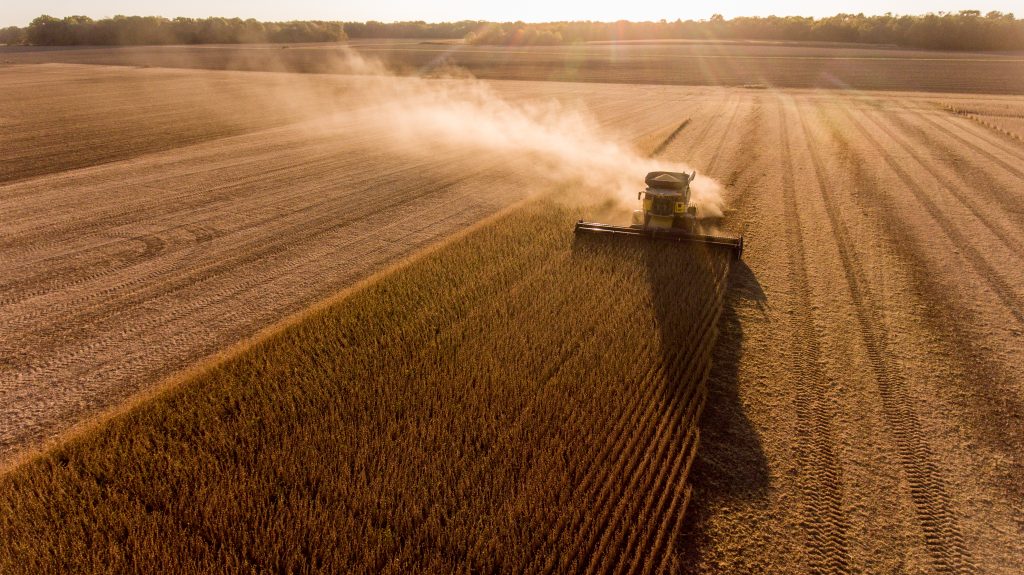
Alongside historical price trends, human behaviour patterns, and market psychology, the system also considers seasonal trends that influence wheat prices and buying behaviour.
This works like a ‘dimmer switch,’ increasing trading activity at times of the year when prices are typically higher and dialling down activity when prices are lower, such as during harvest when a glut of grain enters the market.
Efficiency and Profitability
At a time when efficiency and profitability are more important than ever for the future of both individual farms and the wider agricultural industry, putting your grain marketing strategy in the hands of advanced digital technology could be one of the best decisions you make.
As our platform begins to integrate AI, it will continue to improve and increase the average returns it generates for our clients, strengthening their farm businesses for the long term.
Not only will this further optimise returns and minimise losses, but it also provides peace of mind that the farm’s marketing strategy is fit for a wide range of eventualities.
For more information on ADM Agriculture Ltd’s wheat or barley fund, view our historical results page here, get in touch with your ADM Agriculture Farm Trader, or click here to contact us (email pop up to our enquiries email address).