The Hagberg Falling Number might sound like something from a science fiction film, but it is one of the most important quality tests conducted on harvested grain, in particular wheat.
The test dictates the eventual use of the wheat, from bread making to animal feed, and, as a result, the price the grower receives.
But what exactly is the Hagberg Falling Number and what does it measure? In this article, we take a look.
What is the Hagberg Falling Number?
Although the Hagberg Falling Number can be used as a measure of the quality of triticale, durum wheat, rye, and barley, its principle use in the UK is as a measure of the quality of common wheat to assess its suitability for bread making.
The number represents the extent of sprout damage that has occurred in the harvested grain, which develops when the kernels start to germinate in the final maturation phase of the crop, often due to excessively wet weather prior to harvest.
The test method was developed in the 1950s by Sven Hagberg and his co-worker Harald Perten at the Cereal Laboratory of the Swedish Institute for the Crafts and Industries, giving rise to its alternative but common name, the Hagberg-Perten number.
Since then, it has become the internationally standardised method for measuring sprout damage, approved by several global bodies including the ICC (International Association for Cereal Science and Technology), the ACCI (American Association of Cereal Chemists International), and the ISO (International Organization for Standardisation).
The Hagberg Wheat Test Explained
To determine the sprout damage within a batch of wheat, the Hagberg Falling Number test measures the amount of enzyme alpha-amylase within the grain. Alpha-amylase breaks starch down into sugars and is produced in high levels when germination occurs within the kernels.
High starch content is essential for quality milling wheat, it is what gives dough its elasticity, so increased levels of alpha-amylase are a serious problem. They break the starch down into simple sugars, making the wheat unfit for bread making.
The procedure starts by grinding up the test wheat sample into flour and mixing it with a set volume of distilled water in a test tube.
The test tube is then put into a machine that heats the mixture to boiling point, while simultaneously stirring it, for 60 seconds.
Once this step is completed, a weighted plunger is released on to the dough and the time taken for the plunger to pass all the way through the dough is recorded.
How to Analyse the Results
The longer it takes the plunger to fall through the dough, the better quality the dough is.
That’s because a viscous, elastic dough shows there is little or no alpha-amylase build up in the kernel that has broken down the starch into sugars.
If the plunger falls through the dough mixture quickly, it is because alpha-amylase is present and the starch has been converted to sugar, making the test dough soft, lacking in elasticity, and easy to penetrate. In which case, the wheat is unsuitable for bread making.
The results of the Hagberg Falling Number test are expressed in seconds. Group one and group two wheat with a falling number of 250 or above, that is it has taken 250 seconds or more for the plunger to fall through the test dough, is of a good enough quality to be sold as milling wheat.
Wheat Types and Where Hagberg Matters
Prior to the growing season, wheat varieties are classified into one of four groups based on their characteristics.
Group One & Two
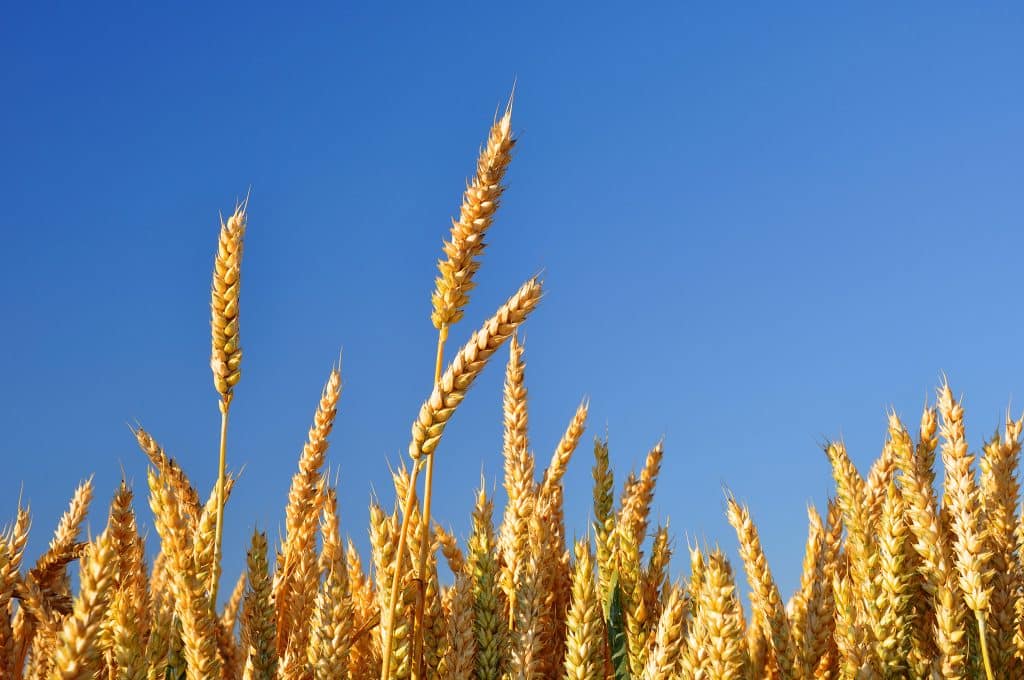
Group one wheat varieties are those that have the potential to produce top-quality milling wheat if grown under the right conditions. However, to qualify, the harvested grain must have a protein level of around 13% and a Hagberg Falling Number of 250 or above.
Example varieties that routinely produce group one milling wheat are Crusoe, Skyfall, SY Cheer and KWS Vibe.
Group two wheat varieties also have the potential to produce milling wheat. However, should any group one or group two variety fail to meet the standard for milling wheat, they can still be sold as feed wheats.
Group 3 – Biscuit Wheat
Group 3 wheats, soft wheats, are commonly used in the manufacture of cakes and biscuits, and in some cases, distilling.
Generally, they result in falling numbers of somewhere between 130 and 180, depending on the variety and growing conditions.
Having some level of alpha-amylase in wheat used for biscuits is desirable because it produces a crumbly texture as opposed to the strong elasticity of bread dough.
Common varieties include Bamford and KWS Solitaire.
Does Hagberg Matter for Feed Wheat?
Ultimately, the Hagberg number is irrelevant to feed wheat. That’s because it has no bearing on the nutritional quality of the wheat, nor does it influence animal performance.
This is because animals such as broiler chickens can digest the starch and sugars within the grain, effectively making the falling number irrelevant to its effectiveness as a livestock feed.
The Causes of Falling Hagberg Numbers
There are a range of factors that influence the Hagberg Falling Number of wheat, including environmental factors and crop husbandry.
Environmental factors include:
- Pre-harvest sprouting
As already discussed, the primary cause of a low falling number is the pre-harvest sprouting. Germination can be caused in the kernel by moist conditions once the grain has matured but before it is harvested. This leads to a build up of alpha-amylase which reduces the quality of the wheat. - Late-maturity alpha-amylase production
Although germination is the primary cause of alpha-amylase build up, it’s not the only cause. Temperature fluctuations in late season grain can lead to the production of the enzyme without germination needing to take place. - Field conditions
Poor drainage and soil moisture can lead to uneven ripening and lodged crops which are prone to sprouting and leads to enzyme build up. This, combined with temperature variability, can also promote enzyme activity. - Crop Husbandry
Environmental causes of a low falling number can be compounded with crop husbandry factors, including:- Crop variety
Some wheat varieties are more susceptible to pre-harvest sprouting and late-maturity alpha-amylase than others, so choosing carefully is recommended. - Late harvest
Unsurprisingly, the longer a crop is left in the field, the higher the risk of pre-harvest sprouting becomes. This is especially the case if harvest is being delayed due to wet conditions.
- Crop variety
How to Increase the Hagberg Falling Number in Wheat
Increasing the Hagberg Falling Number of wheat falls into two categories, preventing pre-harvest sprouting and alpha-amylase build up in standing wheat and post-harvest blending.
In trying to prevent pre-harvest sprouting, it is critical to ensure an even crop with lodging kept to a minimum. Key to achieving this is ensuring optimum applications of nitrogen and potassium which help to produce even ripening and strong straw that will keep the crop standing.
The use of precision farming techniques is essential to manage variable soil nitrogen supply.
Potassium is vital to achieving high-quality grain with a good specific weight. A shortage of potassium leads to premature ripening, lower grain size and weight, and an increased risk of pre-harvest sprouting as the crop ripens early and unevenly.
Therefore, ensuring optimal applications of N and K will support the production of grain with a high falling number.
Once grain is harvested, it is theoretically possible to increase the falling number of low quality wheat by blending it with high quality wheat.
However, it is incredibly difficult to do and there are no guarantees as to the results. For example, if you were to blend 100 tonnes of 100 falling number wheat with 100 tonnes of 200, you would expect to get 200 tonnes of 150 falling number.
The reality is this is very unlikely the results are unpredictable, so blending cannot be relied upon as an effective way to increase Hagberg Falling Number.
Summary
Hagberg Falling Number is the international standard by which wheat is assessed for its suitability for bread making. Group one and group two wheat varieties with a falling number of 250 or above are of sufficient quality to go for milling wheat, whereas group three wheats with a falling number of between 130 and 180 are preferred for biscuits, and cakes.
Wheat of any group that doesn’t achieve its quality potential is often sold as feed wheat.
The falling number is a measure of how long it takes a plunger to fall through a dough sample made from the test wheat and is related to the amount of enzyme alpha-amylase is in the kernel. The more alpha-amylase present, the more of the starch within the kernel has been turned to sugar, the quicker the plunger falls through the dough, and the lower quality the wheat is.
Alpha-amylase is often produced if the crop begins to germinate prior to harvest due to wet conditions, although it can be produced by temperature fluctuations late in the season. Crop variety, field conditions, uneven crops and lodging, and poor nutrition management can all add to the problem.
To ensure a high falling number, it is important to apply nitrogen and potassium at the optimum levels to increase straw strength and produce an even crop.
For more information about the Hagberg Falling Number, speak to our experts on 01472 421200.